
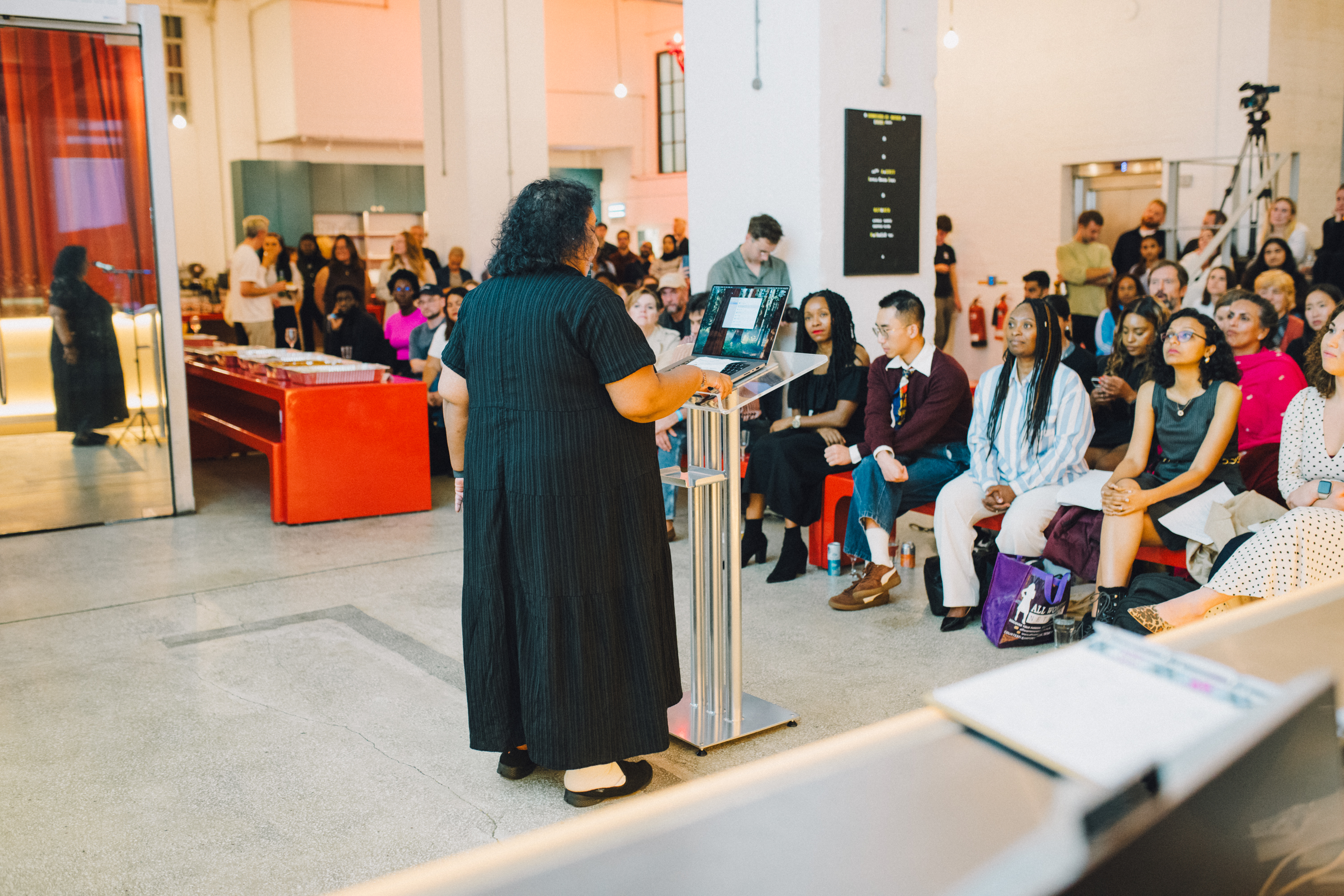
By Vishnee Sauntoo, Founder, VS Comms • 5 min read
Twenty-five years is long enough to stop counting the campaigns and start noticing the patterns underneath them. I’ve written a lot over the years about strategy, audience and messaging. This one is different. This is what the work itself has taught me: the lessons that took a whole career to learn properly, not a workshop afternoon.
1. The audience question never stops being the first question
I said this in my very first weeks as a press officer, and I’ll say it in whatever I’m doing in another twenty-five years: nobody cares about your organisation the way you do, and that’s fine. What they care about is themselves, their community, the thing that’s keeping them up at night. Every campaign I’m proud of started with answering, honestly, who this is for and what we want them to feel or do differently. Every campaign I’d rather forget skipped that question because we were in a hurry.
2. Outputs are not outcomes, and the difference is the whole job
Early in my career I measured success in press cuttings (yep, good old hard copy cutting). Later, in likes and shares. It took me longer than I’d like to admit to understand that none of that is the point. 1 million deciding to stop smoking on No Smoking Day, £4 million raised in four weeks during an emergency appeal, a 7,300-signature campaign that shifted UK policy, 78 million views on a film built to change how a crisis was talked about- those numbers matter because of what changed, not because they’re big. If I can’t tell you what shifted in someone’s understanding or behaviour, I haven’t finished the job. I’ve just made noise.
3. Trust is built in the unglamorous months, not the big campaign
The moment everyone remembers is the launch, the film, the appeal that goes viral. What actually earns an audience’s trust is the eighteen months before it: showing up consistently, telling the truth even when it’s not flattering, and doing the quiet work of being accountable for what you said you’d do. ‘Second a Day’ and the appeals that followed it didn’t work because they were clever. They worked because the organisations behind them had spent years being honest first.
4. Story isn’t decoration on top of the strategy – it’s the delivery mechanism for it
I wrote recently about leaving a Biotechnology degree to go and tell stories, and the thread runs straight through to here. A strategy document tells you what you’re trying to achieve. A story is what actually gets it into someone’s head and heart. I’ve sat in enough boardrooms to know that the strategy nobody can retell in one sentence, using a human example, will quietly fail to survive contact with a real conversation.
5. Your differences are the asset, not the thing to manage around
I spent a long stretch of my career being one of very few South Asian faces in the room. For a while I treated that as background noise, something to get past rather than something to use. What I understand now is that the instinct to translate, to explain a thing so it lands with someone who doesn’t already speak the shorthand, is not a workaround for not quite belonging. It is the actual craft of communications. Whatever makes you different from the room you’re standing in is very often the exact skill that room needs.
6. Nobody builds a career like this alone, and you shouldn’t try to
I’ve had a coach tell me, at a low point, that if something is hurting you, you’re allowed to leave it- advice that changed the shape of my career. I’ve had mentors who answered questions I didn’t know how to ask. For years now, I’ve mentored others through CharityComms and Women in PR, and reverse-mentored senior leaders through the Taylor Bennett Foundation, because the conversations that helped me most were the ones where someone senior simply told me the truth. Twenty-five years in, mentoring isn’t a side project. It’s one of the most useful things I do all week.
What I’d tell myself at the start
If I could go back to that first press office job, I’d tell myself this: the technical skills will come. The writing will get faster, the strategy work will get sharper, the instincts will get better. What won’t change, and what’s worth building early, is the discipline of asking who this is for before you decide what to say, and the honesty to keep asking it, campaign after campaign, for as long as you do this work.
Twenty-five years on, I’ve built VS Comms around exactly that discipline: strategy first, story as the delivery mechanism, and audience as the test for every single decision. If any part of this resonates with where your organisation is right now, I’d genuinely like to talk it through – no pitch, just a conversation. Get in touch at vishnee@vscomms.co.uk, or find out more at vscomms.co.uk.
Vishnee Sauntoo is the Founder of VS Comms and a strategic communications consultant with 25 years’ experience working with charities, not-for-profits, and mission-led organisations. She is a Trustee of CharityComms and hosts The Comms Collective Podcast.
Leave a Reply